“Don’t Stop The Music” is a 2007 dance-pop anthem from Rihanna’s third studio album, Good Girl Gone Bad, that became a defining moment in her career and a catalyst for the mainstream integration of EDM into American pop radio. Produced by the Norwegian duo StarGate and featuring an iconic “mama-say, mama-sa, ma-ma-koosa” hook inspired by Michael Jackson’s “Wanna Be Startin’ Somethin’,” the track blends infectious synths, a driving four-on-the-floor beat, and Rihanna’s energetic vocal delivery into a timeless party record that continues to resonate nearly two decades later.
Background and Context
“Don’t Stop The Music” arrived at a pivotal moment in mid-2000s pop music, when dance and electronic sounds were still largely marginalized on American radio despite their dominance in European clubs and festivals. The song was conceived as part of Good Girl Gone Bad, an album that marked Rihanna’s transformation from teen pop-R&B newcomer into a globally recognized, sonically adventurous superstar. StarGate, the production team behind the track, has described it as a “seminal record” that helped prove dance music could work on U.S. pop radio—a claim supported by its commercial performance and lasting influence.
The track’s signature hook traces its lineage back through Michael Jackson’s 1982 hit to Manu Dibango’s 1972 Afro-funk classic “Soul Makossa,” creating a direct throughline from 1970s disco culture to 2000s EDM-pop. This intertextual layering not only enriched the song’s sonic identity but also embedded it within a broader historical narrative of dance music evolution.
Critical Reception: The Negative Case
Despite its commercial success and cultural impact, “Don’t Stop The Music” has faced criticism on artistic, ethical, and cultural grounds.
Artistic simplicity and formulaic structure: Detractors have argued that the song relies heavily on repetitive hooks and predictable chord progressions, prioritizing danceability over lyrical or musical complexity. Some critics dismissed it as a “dumb but fun” party track, suggesting that its appeal lies more in its energy than in any substantive artistic innovation.
Lack of lyrical depth: The lyrics focus almost exclusively on the immediate experience of dancing and losing oneself in the music, with little narrative or emotional nuance. Critics have interpreted this as a reflection of pop music’s tendency to favor escapism over introspection, potentially reinforcing a culture of hedonistic consumption.
Cultural appropriation concerns: While the song’s use of the “ma-ma-koosa” hook pays homage to earlier disco and Afro-funk traditions, some commentators have raised questions about whether such interpolations adequately acknowledge or compensate their original creators, particularly in an industry historically marked by exploitative sampling practices.
Commercialization of dance culture: Critics have also situated “Don’t Stop The Music” within a broader pattern of pop’s co-opting of underground dance aesthetics for mass-market consumption, arguing that the song helped sanitize and commodify club culture for mainstream audiences.
Critical Reception: The Positive Case
Conversely, “Don’t Stop The Music” has been celebrated by supporters as a groundbreaking, culturally significant track that reshaped the sonic landscape of 21st-century pop.
Artistic boldness and sonic innovation: Defenders praise the song’s seamless integration of EDM elements into mainstream pop, crediting it with paving the way for the genre’s explosion in the late 2000s and early 2010s. StarGate has noted that prior to this track—and Justin Timberlake’s “SexyBack”—dance music was “basically non-existent in American pop,” making “Don’t Stop The Music” a trailblazing effort.
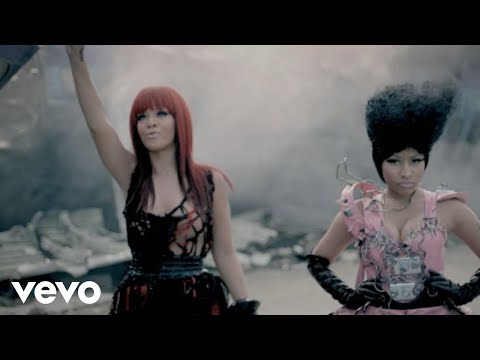
Cultural impact and global resonance: The song peaked at number three on the U.S. Billboard Hot 100 and topped charts in multiple countries, cementing Rihanna’s status as a global superstar and proving that dance-pop could achieve massive commercial success. Its music video, set in a futuristic Berlin nightclub, became a staple on MTV and other music channels, further amplifying its reach and influence.
Legacy and genre influence: “Don’t Stop The Music” has been cited as a key influence by subsequent artists, including Lady Gaga, Kesha, and Beyoncé, who helped carry the EDM-pop torch into the next decade. The track’s success demonstrated that dance music had a viable home in the U.S. market, encouraging producers and labels to invest more heavily in electronic sounds.
Timeless appeal: Nearly two decades after its release, the song remains a staple in workout playlists, party anthems, and DJ sets, thanks to its driving beat, infectious hook, and Rihanna’s powerful vocal performance. Its ability to transcend generational and genre boundaries has solidified its place as a modern classic.
Societal and Sectoral Contributions
“Don’t Stop The Music” impacted multiple sectors, both directly and indirectly:
Music and entertainment industry: The track reinforced Rihanna’s artistic evolution and commercial viability, influencing producers and artists who sought to replicate its dance-pop formula. It contributed to the broader normalization of EDM in mainstream pop, paving the way for the genre’s dominance in the late 2000s and early 2010s.
Fashion and visual media: The music video’s futuristic, neon-lit aesthetic inspired fashion editors, stylists, and visual artists, many of whom incorporated its club-centric imagery into editorial shoots, runway presentations, and digital content.
Digital media and streaming: As one of the early 2000s tracks to gain traction through both traditional radio and emerging digital platforms, “Don’t Stop The Music” helped demonstrate the monetization potential of dance-oriented pop in the digital age.
Cultural discourse and education: The song has been used in academic and journalistic contexts to explore themes of genre evolution, cultural appropriation, and the commercialization of dance music. These discussions, while contentious, have enriched public understanding of how pop music both reflects and shapes societal values.
Economic ripple effects: Beyond Rihanna herself, the song and its video generated work for a wide ecosystem: producers, engineers, dancers, choreographers, stylists, directors, editors, promotional teams, and streaming platforms all benefited from the single’s rollout and ongoing cultural presence. While exact figures are not publicly itemized, high-profile releases of this scale typically inject hundreds of thousands of dollars into local production economies and contribute to long-term brand equity for all involved.
Final Assessment
“Don’t Stop The Music” remains a deeply influential yet occasionally contested artifact in Rihanna’s discography. To its detractors, it represents artistic simplicity, lyrical shallowness, and the commercialization of underground dance culture. To its defenders, it is a strategically bold, culturally resonant statement that asserts the viability of EDM in mainstream pop and generates tangible economic and discursive value across multiple sectors.
What is undeniable is that “Don’t Stop The Music” succeeded on its own terms: it charted, it streamed, it provoked, it endured, and it became a reference point in debates about pop, power, and performance in the 21st century. Whether viewed as a cautionary tale or a triumph of genre innovation, the track’s footprint on music, culture, and industry remains significant—and unlikely to be forgotten.

![Ed Sheeran – Put It All On Me (feat. Ella Mai) [Official Music Video Complete] | Global Love Stories, Streaming Era Critique & Real Industry Impact](https://scaleaiforge.store/wp-content/uploads/2026/07/ed-sheeran-put-it-all-on-me-feat-ella-mai-official-music-video-complete-global-love-stories-streaming-era-critique-real-industry-impact.jpg)
![Ed Sheeran – 2step (feat. Lil Baby) [Official Video Complete] | Kyiv Visual, Trap-Pop Remix, Streaming Controversy & Real Social Impact](https://scaleaiforge.store/wp-content/uploads/2026/07/ed-sheeran-2step-feat-lil-baby-official-video-complete-kyiv-visual-trap-pop-remix-streaming-controversy-real-social-impact.jpg)
![Ed Sheeran & Justin Bieber – I Don’t Care [Official Music and Complete Video] | Viral Duo Collab, Green-Screen Critique, Streaming Power & Real Industry Impact](https://scaleaiforge.store/wp-content/uploads/2026/07/ed-sheeran-justin-bieber-i-dont-care-official-music-and-complete-video-viral-duo-collab-green-screen-critique-streaming-power-real-industry-impact.jpg)
![Ed Sheeran – Beautiful People (feat. Khalid) [Official Music Video Complete] | Anti-Celebrity Anthem, Superficiality Critique, Streaming Power & Real Industry Impact](https://scaleaiforge.store/wp-content/uploads/2026/07/ed-sheeran-beautiful-people-feat-khalid-official-music-video-complete-anti-celebrity-anthem-superficiality-critique-streaming-power-real-industry-impact.jpg)