Take Care – Drake ft. Rihanna
“Take Care,” the title track from Drake’s 2011 album Take Care featuring Rihanna, is widely regarded as one of the defining R&B/hip‑hop collaborations of the 2010s and a cornerstone song in both artists’ catalogs. Built on a minimalist, melancholic piano loop, slow tempo, and intimate vocal interplay, the song functions as an emotional pact between two people who have been hurt before but are willing to try again—with each other—while explicitly promising to “take care” of one another’s wounds.
Background, production, and release context
“Take Care” was written by Aubrey “Drake” Graham, Robyn “Rihanna” Fenty, Jamie “Jamie xx” Smith, Chantal “Kyla” Kish铺垫 (via the Jamie xx cover of “I’ll Take Care of U”), and additional writers associated with the original track, and produced primarily by Jamie xx with additional production by Noah “40” Shebib. The song’s core is a reworked interpolation of Jamie xx’s 2011 reinterpretation of Bobby Womack and Gil Scott‑Heroin’s “I’ll Take Care of You,” slowed down even further and stripped to a haunting piano line, sparse drums, and sub‑bass, creating a深夜, introspective mood that became sonically emblematic of the early‑2010s “Toronto sound.”
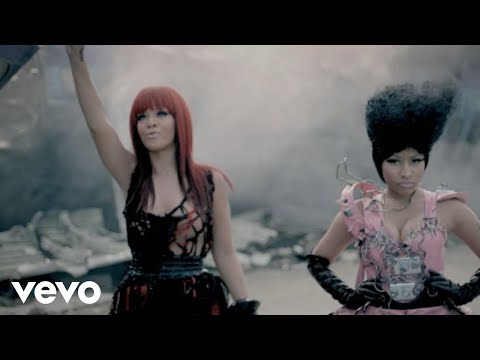
Released as a single in early 2012, “Take Care” reached high positions on airplay and digital charts globally, earning multi‑platinum certifications in several territories and becoming a staple on radio, streaming playlists, and in media. The accompanying music video, directed by Yoann Lemoine (Lomeo), dramatizes the song’s emotional stakes through a narrative of a volatile, on‑and‑off relationship, culminating in a literal house fire and scenes of physical and emotional confrontation that sparked discussion about its portrayal of relationship conflict.
Lyrically, the song is structured as a dialogue: Rihanna opens with a verse acknowledging past pain—“I know you’ve been hurt by someone else / I can tell by the way you carry yourself”—and offering a conditional promise of care if allowed to step in. Drake responds with his own reflections on heartbreak, loyalty, and emotional unavailability, weaving in lines about mutual damage (“I know you’ve been hurt, I know you’ve been hurt”) and the difficulty of trusting again. The chorus—“That’s why I need you to take care of me / I need you to take care of me”—reframes care not as a one‑way rescue but as a reciprocal obligation between two wary, wounded people.
Positive impacts and contributions
From an industry, cultural, and social perspective, “Take Care” delivered several significant positive contributions:
Artistic boldness and emotional depth in mainstream hip‑hop/R&B: At a time when much of mainstream rap emphasized bravado, aggression, or party themes, “Take Care” foregrounded vulnerability, emotional exhaustion, and the desire for mutual support, helping normalize male emotional openness in hip‑hop. Its success demonstrated that slow, introspective songs centered on mental and emotional states could dominate charts and playlists, expanding the range of acceptable subject matter for male rap and R&B stars.
Cementing Drake’s identity as pop’s leading male star: Critics have noted that “Take Care” helped cement Drake as “pop’s reigning male star,” blending singing and rapping in a way that made him ubiquitous across multiple formats and demographics. The track’s sonic template—heavy reverb, spacious mixes, moody chords—became a blueprint for countless imitators and collaborators, influencing production styles across hip‑hop, R&B, and even indie‑electronic spheres.
Collaboration economy and cross‑genre synergy: The partnership between Drake, Rihanna, Jamie xx, and Noah “40” reinforced the commercial and creative synergy between hip‑hop, R&B, and electronic music, supporting income and visibility for artists, producers, and songwriters across these camps. This model sustains jobs in writing, production, legal clearance, marketing, radio promotion, and touring, contributing to the broader employment ecosystem in the music industry.
Cultural resonance and conversations about emotional health: For many listeners, especially young men and women navigating relationships, trauma, and trust issues, “Take Care” offered a mainstream, emotionally articulate framework for discussing vulnerability and mutual responsibility. Its repeated emphasis on “taking care” of each other, despite past damage, resonated as both a romantic ideal and a broader statement about the need for emotional support in a fast‑paced, often alienating modern world.
Long‑term catalog value and media presence: As a multi‑platinum, critically acclaimed single with enduring streaming presence and periodic sync licensing in TV, film, and advertising, “Take Care” continues to generate revenue for Drake, Rihanna, their labels, publishers, and rights holders, contributing to the ongoing financial health of the entities involved in its creation and distribution.
Critical and negative perspectives
Despite its acclaim, “Take Care” can also be critiqued from artistic, ethical, and social angles:
Glamorization of dysfunctional relationship dynamics: The lyrics and especially the music video depict a relationship marked by intense conflict, emotional volatility, and, visually, physical aggression and property destruction. While intended to dramatize passion and pain, this portrayal risks normalizing toxic patterns—constant fighting, explosive arguments, and emotional dependency—as the price of “real” love, potentially influencing listeners’ expectations of romantic relationships.
Ambiguity around accountability and healing: The song’s promise to “take care” of each other is emotionally compelling but vague about what actual care looks like in practice—therapy, boundaries, communication skills, or concrete support. In a cultural moment increasingly attentive to mental health, the track can be read as romanticizing the idea that love alone is enough to heal deep wounds, without addressing the structural or professional resources often required for genuine recovery.
Commercialization of emotional pain: Like many Drake and Rihanna collaborations, “Take Care” transforms personal trauma and relational instability into a highly marketable product, wrapped in a beautiful, minimalist beat. While this can be validating for listeners, it also fits a pattern where emotional suffering is repackaged as consumable content, benefiting corporate stakeholders as much as—or more than—the artists and affected communities.
Limited direct social progress: As a pop/hip‑hop single, “Take Care” did not drive policy change, fund mental health services, or directly address issues like domestic violence prevention, relationship education, or access to therapy. Its contribution to societal progress is indirect—through representation, emotional resonance, and economic activity—rather than through advocacy, education, or structural reform.
Economic and sectoral contribution: a realistic assessment
Evaluating the real‑world impact of “Take Care” requires separating direct financial effects from broader cultural influence:
Direct financial impact: As a multi‑platinum, globally charting single with heavy radio play, strong digital sales, and massive streaming numbers over more than a decade, “Take Care” has likely generated tens of millions of dollars in cumulative revenue across sales, streams, licensing, and performance rights, distributed among Drake, Rihanna, their labels, publishers, producers (including Jamie xx and Noah “40”), and co‑writers.
Employment and industry support: The song’s lifecycle supported work in songwriting, production, legal clearance, recording, mixing, video production, radio promotion, marketing, digital distribution, playlist curation, and rights administration, contributing to the broader employment ecosystem around a major‑label release.
Cultural and symbolic capital: Its main long‑term value lies in helping define the sonic and emotional identity of early‑2010s hip‑hop/R&B, influencing countless artists and producers, and reinforcing both Drake and Rihanna as versatile, genre‑spanning stars. This symbolic capital indirectly supported later ventures in fashion, beauty, and business for both artists, with far‑reaching economic and employment effects.
Societal progress: The song’s direct contribution to social progress is modest. It offered a powerful, emotionally articulate portrayal of mutual vulnerability and the desire to heal together, but did not translate into funded programs, policy changes, or measurable improvements in mental health support, relationship education, or violence prevention.
Balanced assessment
“Take Care – Drake ft. Rihanna” is a sonically minimal yet emotionally maximal track that played a pivotal role in shaping the sound and emotional grammar of 2010s hip‑hop and R&B. Its positive contributions include expanding the emotional range of mainstream rap, cementing Drake’s status as a global star, reinforcing cross‑genre collaboration models, and offering a resonant narrative about mutual responsibility in the face of past trauma.
At the same time, the song exemplifies the ethical complexities of glamorizing volatile relationships, the vagueness of “care” as a solution to deep psychological wounds, and the limited direct social impact of entertainment‑focused releases. Its real value to society is less about explicit progress and more about influencing how vulnerability, trust, and emotional support are represented in mainstream culture, while sustaining a wide network of creative, legal, and commercial industries.

![Ed Sheeran – Put It All On Me (feat. Ella Mai) [Official Music Video Complete] | Global Love Stories, Streaming Era Critique & Real Industry Impact](https://scaleaiforge.store/wp-content/uploads/2026/07/ed-sheeran-put-it-all-on-me-feat-ella-mai-official-music-video-complete-global-love-stories-streaming-era-critique-real-industry-impact.jpg)
![Ed Sheeran – 2step (feat. Lil Baby) [Official Video Complete] | Kyiv Visual, Trap-Pop Remix, Streaming Controversy & Real Social Impact](https://scaleaiforge.store/wp-content/uploads/2026/07/ed-sheeran-2step-feat-lil-baby-official-video-complete-kyiv-visual-trap-pop-remix-streaming-controversy-real-social-impact.jpg)
![Ed Sheeran & Justin Bieber – I Don’t Care [Official Music and Complete Video] | Viral Duo Collab, Green-Screen Critique, Streaming Power & Real Industry Impact](https://scaleaiforge.store/wp-content/uploads/2026/07/ed-sheeran-justin-bieber-i-dont-care-official-music-and-complete-video-viral-duo-collab-green-screen-critique-streaming-power-real-industry-impact.jpg)
![Ed Sheeran – Beautiful People (feat. Khalid) [Official Music Video Complete] | Anti-Celebrity Anthem, Superficiality Critique, Streaming Power & Real Industry Impact](https://scaleaiforge.store/wp-content/uploads/2026/07/ed-sheeran-beautiful-people-feat-khalid-official-music-video-complete-anti-celebrity-anthem-superficiality-critique-streaming-power-real-industry-impact.jpg)